
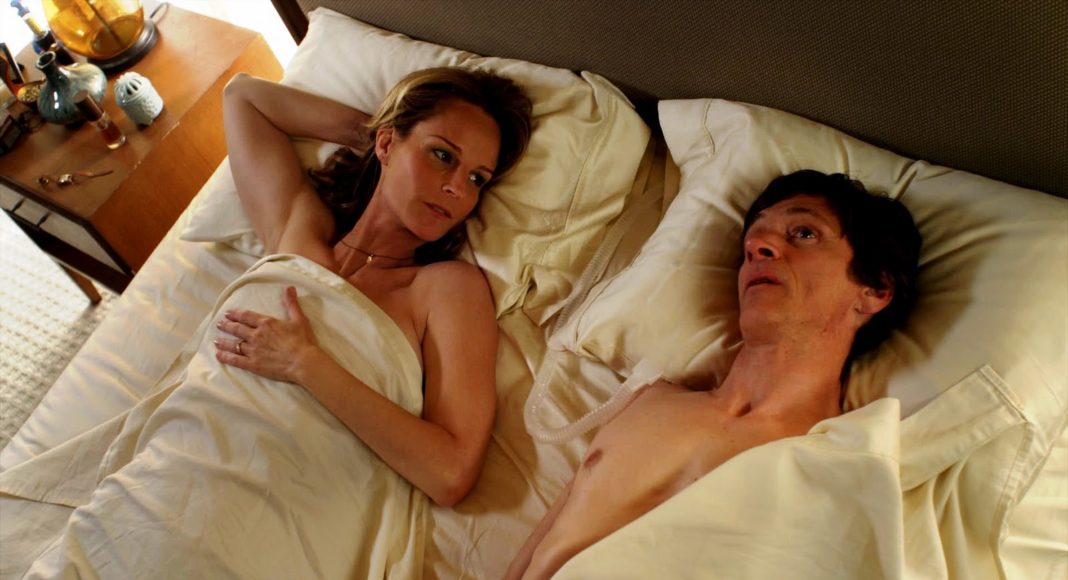
Based on a true story, The Sessions is the autobiographical account of Mark O’Brien’s experience with a sex surrogate brought to the screen. That might be enough to work a film out of, actually, but Mark has spent the majority of his 38 years in an iron lung. Stricken by polio in his youth, he can only move his head, and not all that much. Without a lot of opportunities, Mark has nevertheless made the best of his situation, graduating from Berkeley, and managing some success as a poet and writer.
We join Mark as he finally comes to the breaking point in the sexuality department. Capable beyond comprehension in certain ways, there are some opportunities that are not beating a path to the iron lung. It isn’t that he hasn’t thought about it quite regularly, and it’s no wonder given the intimate contact he has with his caregivers, some of whom are rather attractive, but beyond the obvious limitations, Mark is also a fairly serious Catholic. Now, two events have conveniently popped up in his life, one that the movie does not directly point out for its utility for Mark, and another that brings things to the fore in a way that Mark cannot avoid.
When he’s offered the assignment of writing an article about sex and the handicap, that’s not only an obvious nudge, but it has that element of distance that makes for a solidish excuse for wandering into certain areas. More importantly, for Mark, a new priest takes over his church. Though the movie glides past this point without taking much notice of it, you have to imagine that this is a window Mark has been waiting for. See, he wants to talk to his priest about the idea. Sure, he’s proposed to a woman, but that whole waiting for marriage thing makes things rough for Mark, and he wants some advice on where God might stand on the exceptions to the rule. That might be an easier conversation with someone who hasn’t (we assume) known you for your whole life, iron lung or no.
The new priest, played by William H. Macy, leans toward supporting Mark, though it’s a difficult subject, and as Mark’s journey to intercourse continues, the pair become very close. The journey leads to a sex surrogate, Helen Hunt, who specializes in handicapped clients.
The film plays out with Mark moving through relationships as only one with virtually no ability to experience them (from our perspective) can, and whether that involves caregivers, priests, or potential sexual partners really doesn’t make a lot of difference. Now that Mark has committed to the idea of tackling the beast, he sets himself up for a new round of personal connections that, quite frankly, he just doesn’t know what to do with.
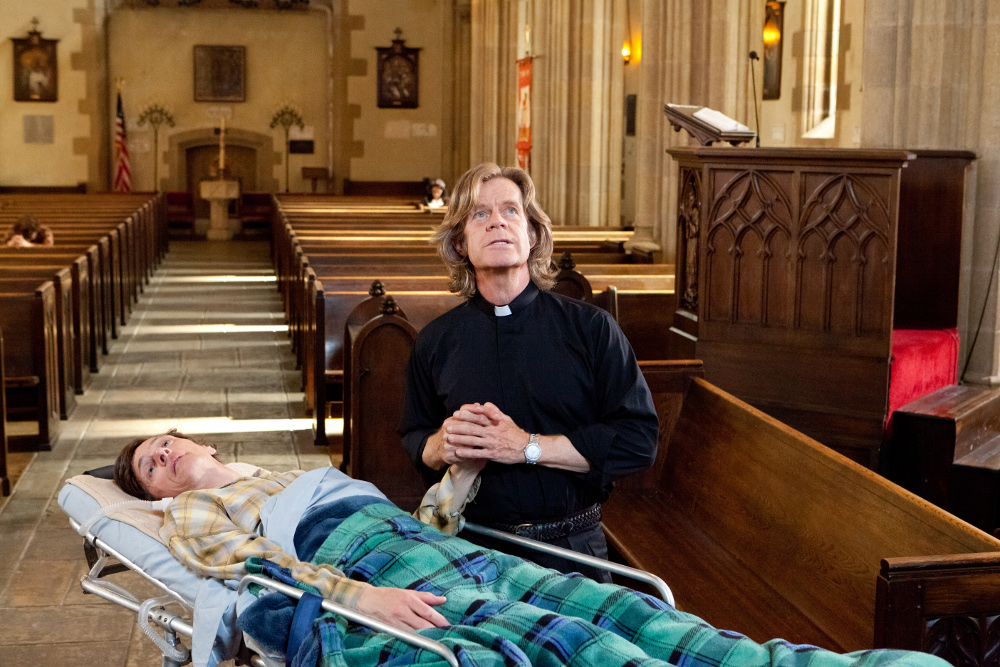
It’s a curious play on intimacy, inhibition, and the struggles involved with relationships, almost akin to science-fiction in the overall effort. By relaying situations that are “not real,” we manage an astounding level of insight into those that are.
Most interesting is the ultimate clash between Mark’s curious, but nervous effort and Cheryl’s (Helen Hunt) soft, but almost workmanlike approach to the discussion and the sessions. The act itself aside, Mark has to come to grips with what he’s doing, while now finding himself in a less than intimate version of life’s deepest intimacy. Already involved in some odd spins on intimacy, privacy, and the power of relationships, Mark has to wonder as these pseudo-intimate meetings continue, what is he actually after here anyway?
The film doesn’t focus exclusively on the ultimate achievement either, as is obvious just by the several conversations with his priest, but also provides a remarkable account of how Mark fits into life in general, and the curious ways in which people react to him. Providing narration for much of the “grand scheme of things” episodes, Mark’s voice comes through well, and we find someone with a sensibility easy to compare to David Sedaris style life musings. As it plays out, this gives us a great window to see how things are, without the film having to spell it out.
Just as one example, we find two different examples of men unable to avoid a certain amount of jealousy when it comes to Mark, something that seems at first glance decidedly ludicrous. Chiefly, Cheryl’s husband becomes perturbed when Mark sends a poem to the house, and there is a mountain of “work” delivered here by the situations and responses that are a prime example of the film’s ability to dig into relationships, and how they work. Given that it seems any amount of jealousy is unusual in this particular example of a sex surrogates marriage, that it now comes out, when the client is all but unable to move is not only carefully drawn, but a powerful statement. It’s possibly even true.
In the other jealousy example, the girl in question says to her boyfriend that Mark is, “more of a man than you’ll ever be,” and the rub there is that everyone involved knows it’s true. Reduced as far as conceivably possible to a mind alone, Mark radiates enough “personhood” that men around him know where they stand.
Buoyed by solid (but not quite as outstanding as you may have heard) performances all around, the film has heart, and is woven together in a way that entertains far more than you’d expect. You’d imagine the lasting question revolves around what Mark managed to get out of his experience, perhaps out of life generally, but as the film so smartly shows us at the end, your life isn’t about you.
Special Features
 The special features are made up of the usual suspects, and none of them go beyond the behind-the-scenes featurettes implied by their titles. That isn’t to say that those who take a shine to the film won’t enjoy them though. The featurette with Helen Hunt is especially good actually, despite the fact that all of these featurettes run under five minutes, and frankly might have been put to better if we threw them together as one entity.
You get one with John Hawkes, and the Hunt one already mentioned, which detail, to some extent or another given their brevity, the chore of putting on the respective roles. Another showcases the women in Mark’s life and how their unique perspectives are meant to come to the fore.
A Session with the Cast is something of a throwaway marketing reel which gives castmembers the chance to create a soundbite on the film’s premise, and another offers up some insight from Ben Lewin on bringing the story to life.
Beyond that you get a couple of deleted scenes that aren’t particularly relevant, and an Ultraviolet copy of the film.
It’s unfortunate really, though this is how the numbers game works, I suppose. Here is a film that might have put together some great special features that would have been appreciated by fans, and would really have added some value to the purchase. As it is, these little nibbles don’t add up to much, and certainly aren’t pushing anyone over the edge.
Below check out the trailer
[springboard type=”video” id=”676853″ player=”arey021″ width=”550″ height=”390″ ]
Special Features:
- Theatrical Feature Blu-ray
- John Hawkes becomes Mark O Brien
- Helen Hunt as the Sex Surrogate
- The Women Who Loved Mark O Brien
Blu-ray Exclusive Features:
- Deleted Scenes
- Writer/Director Ben Lewin Finds Inspiration
- A Session with the Cast
- Ultraviolet Copy
RU?
Related articles


