
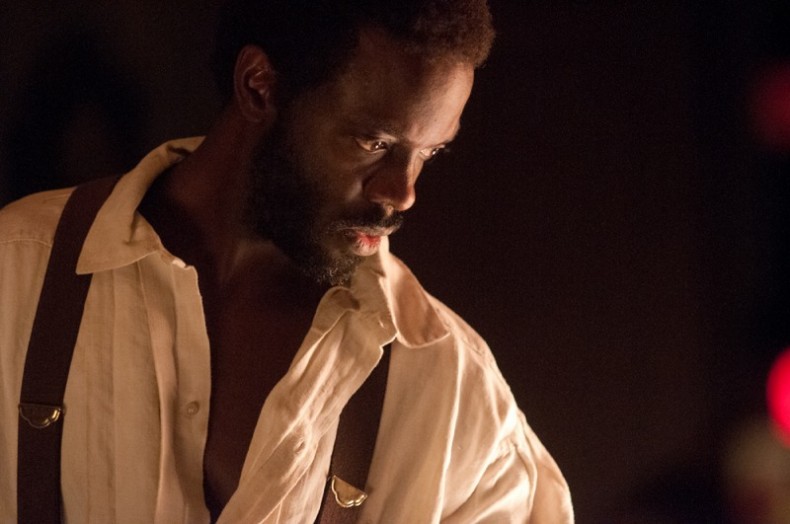
I know you’re watching Copper, as well you should, and I had a chance to talk with Ato Essandoh (Matthew Freeman) recently. It was an interesting conversation, filled with a lot of laughter, and surprisingly, we talked about the laughter on set for much of the time. Stemming from my conversation with Donal Logue, I wanted to know if the set was really as light-hearted as he suggested, and apparently it is.
It was a great time, and I’ve interviewed few people who were easier to talk to. As you know already, things are really heating up for the Freemans, and I… well, I didn’t really get the scoop on any of it.
Check it out below.

So, I talked to Donal Logue not long ago, and I thought it would be interesting to throw this out and see what your response was – to listen to him talk, you’d think you guys were filming The Brady Bunch. I think that’s a surprising thought to a lot of viewers.
Ato Essandoh: That we all like each other?
No, I guess that it’s not intense. That it’s just like filming anything else. Well, is it just like filming anything else? Are you laid back and joking like you would be if you were filming something light?
AE: Yeah, I think even moreso. Honestly, it’s the closest set I’ve been on. Everybody hangs out. Everybody goes out, and I think we very much have the gallows humor, because I think when you’re representing times like that, you have to understand, or at least our understanding is that everything was so crappy back then that you have to let things go.
As opposed to our First World nation where we would have talks about it and we would have psychologists and child therapists around to help us through everything, and we would be taking yoga classes and meditating and going on retreats. They didn’t have any time for that, so there’s a certain gruffness that everyone has to possess on that show. I think for us it’s just being able to joke around and having a comfortable sense around each other, and it engenders a trust to be able to do these scenes, and not want to kill ourselves at the end.
It’s a very tricky situation. It’s not just that you’re period, you’re a very specific kind of horrible period, and in the most horrible place in that period. Is it tricky to get into that mindset, as opposed to other roles? You know, you’re doing Hamlet or something, or you’re doing a regular police drama, that’s one thing, but there are so many layers of craziness going on – is it a harder role to get into than most things?
AE: For me, piggybacking on what I was saying before, for Dr. Freeman, I have to realize that the levels of racism that I have experienced in my life in the present day pale in comparison to what they must have been going through back then.
I have to dial down my own tolerance of say the N word, and just being treated badly, because if I were existing there, I could not fight back in any of the ways I enjoy now, because I would be lynched instantly. So, that’s the thing I have to understand when they’re throwing the word at me willy-nilly, or they’re treating me like I’m less than a human. That’s what I’ve had to get used to, because you’re still in the present day hearing all of this stuff, and realizing that you’re still having a reaction to it, just because that’s been bred into all of us. But, I have to pare down and I have to find ways to divert the energy into something else. What he does is divert his energy into his work and his passion for justice. So, that’s been an interesting thing for me.
Yeah, trying to distance yourself from some thing as an actor, and there are some things and then there are some things.
AE: Yeah, and I was amazed at how it would still impact me, even though I wasn’t in any real life racist situations, or anything like that. Everyone was very understanding, but it’s amazing on a psychological level how that still impacts me, and I would still come away from set sometimes shooting scenes and I would confide in Tessa Thompson, who is a very dear friend of mine and plays Sara, and I’d say, “This is hard. I can’t believe that even in make-believe I can’t get past some of this stuff.”
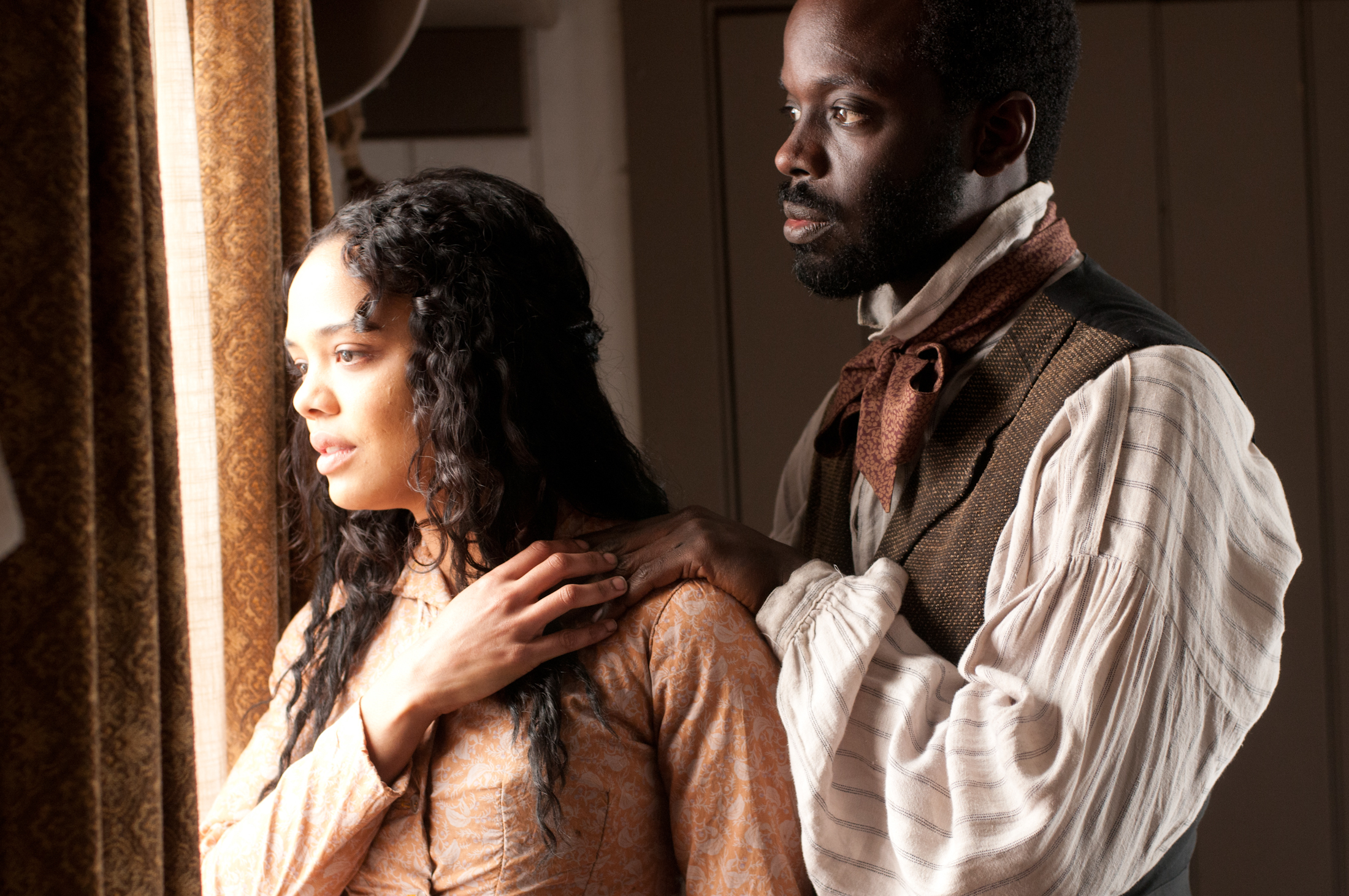
I’m thinking, watching the show, that some of them are harder than others too, and I wonder if it’s surprising which ones are harder than others. You know, as you read the script you think – that’s going to be hard, and that one isn’t – and then it turns out, you didn’t know. In the second episode of this season, for example, there is a point that a guard outside the house says something like, “be a good Nigger about it.” In a way, I mean, there’s something about the way that he isn’t actually trying to be horrible about it –
AE: Exactly.
But, there’s something about the way that it is so routine and off-hand for him, that it made me think, I wonder if that’s actually worse.
AE: Right. Oh yeah. Because there’s a disconnect from what they’re actually doing. That was another thing I had to understand about the time. That word was said all the time. It was like the word “the,” or anything else. So, I realized that I really had to get to a point that I understand that there was a blitheness to it. There was a breeziness to it that I’ve never experienced. Especially with what’s going on with Paula Deen. When you use that word now, there’s an intent behind it. Because everybody is now on the same page, that when you’re saying that word, most of the time, especially when you’re saying at somebody, it is to hurt that person.
Whereas back then, not excusing their behavior, it was so ubiquitous that they didn’t even think about it, and that’s the way Will Bowes, the guy who played Phinbar. Yeah, I just say the word. In fact, he would apologize for it, and I’d say, “Hey, don’t apologize for acting. You’re going to ruin it.”
Even to the point, I don’t know if I can think of a specific example of this in the show, but it easily could happen that even someone your character is friendly with, they still just say it. And might actually really not mean anything, it’s just the word that is used.
AE: Yeah.
Are there other things that stand out as hard to get around in playing this character that make it especially tricky? Just the graphicness of everything, or…
AE: There’s always the juxtaposition of how we would deal with something now, as opposed to the way something is dealt with everyday then. For me, it’s also the treatment of women, which is something that, in the same way that the N word was thrown around, just the general treating of women as not even second class citizens.
The way the women in the whorehouse are treated and the way they’re talked about, just as sort of cattle to be ravaged. And also the Annie character, you can’t go into that world with a present day mind or you would be killed, because you would be trying to save everybody and they wouldn’t even understand why they were being saved, or what the problem was.
Yeah, it’s really a psychological trick to get into any of the characters without judging the characters, because that’s something you don’t ever want to do as an actor. You want to play the character as written, and not with a judgment, because nobody really judges themselves when they’re doing what they’re doing, when they think it’s right in their world. Unless they’re confronted with something from in their world.
Especially, when you have good characters. The show has great characters, and it’s actually weird that they are so well-portrayed as how people then would be.
AE: Right.
I say that like I know. They at least trick me into believing that’s how people were. Even just down to how people carry themselves. Of course, lots of great actors in the show, but even how people stand. There’s so much going on, and to get down to those details is really impressive.
As we move on with the show (this interview was just at about the time of the fifth episode), is your character expanding even more now that you’re going to be more in the thick of things? Will you be involved even more?
AE: Yes, absolutely. It’s very exciting, Matthew Freeman isn’t just going to be Corky’s forensic right-hand man. There’s going to be a whole arc where he’s investigating his own medical issue. In the mix of investigating it, he’s going to have to face his own demons as far as – how is it that you continue to be the fine, upstanding citizen in the face of all the racism and oppression. You’ll see the cracks in his armor. You’ll see him taking matters into his own hands, and sometimes it works and sometimes it doesn’t. I’m excited about it, because it even more humanizes him in a way that was only briefly touched on last season.
Yeah, I was going to say, that sounds cool, because I remember in some very early episodes in the first season it seemed like we were getting that sort of stuff –
AE: Right.
– where he almost couldn’t stand to be himself.
AE: Exactly.
And, then other things took over, and we didn’t focus on him as much.
If you’re going to be more in the thick – you know, it’s one thing if we come to consult with you, we almost remove ourselves a bit from the dirt, and come see you – if you’re moving in… you know, it seems like maybe you’re due for a beating in this show. Are you going to be involved… I mean, everyone in the show has had the snot kicked out them at least a couple of times.
AE: All, I’ll say is that I can neither confirm nor deny.
That you will get beat up soon?
AE: That I will get beat up, or do the beating, I can neither confirm nor deny. But, he will be in some perilous situations, and he will have to make some perilous decisions.
Well, who isn’t? You walk out the door in this show and you’re in a perilous situation.
AE: Yeah, you get out of bed, you’re pretty much —-ed, so…
Are you filming more Elementary as well, or…
AE: There are slight rumors about Elementary. It was supposed to be a one-off, but I guess people liked the character, and the writers liked the character, so there were a couple more episodes, but now it’s a question of scheduling me with Copper, assuming Copper is renewed, knock on wood.
I think with the numbers its had the first episodes…
AE: Yeah, I mean really its an embarrassment of riches. I would love to do more Elementary, and Johnny and Lucy are just such pros. I’m trying to have my cake and eat it too, so that’s how I’m going to roll.
I’m just at a point that I’ve never found myself where I didn’t want to be. Elementary has been amazing, Copper is amazing. I did Django last year, and all of that stuff I’m thinking, “I’m just going to smoke it while I got it.”
You know, that was actually a bit of a thing for me in Django, because I was pretty familiar with you going into that, and I’m watching the movie and I see, and then it’s, “Oh, he’s going to die really fast.” That was actually a weird moment watching the film. You see someone pop up in the film, and you think, “Oh, I like him,” and then you see the situation.
AE: There’s no way he’s getting out of that. Yeah, a lot of my friends that I told about it, I mean, I knew how short the part was, but they were excited about it, and they had the same reaction. As soon as we saw you… yeah, sorry guys.
Do you have other things going on at the moment?
AE: I’m trying to do some theater. I have a theater company that I’m one of the members of called Cold Core, and we develop plays. I really miss theater. In the time between now and Copper being picked up again, I want to do a lot more theater. Just to get my beak wet on it.
If you had your druthers, would you mostly do theater?
AE: I think if theater payed like TV, I’d be in theater all the time. There’s nothing like the crowd.
Every actor has their thing. Some of them want to do TV, even if it didn’t pay that well, they wouldn’t care…
It was great talking to you. Like I said, it was just such a surprising thing talking to Donal Logue. I mean, he’s in a strange place right now – going from Vikings, to Copper, to Sons of Anarchy – I mean, could you be in a show where anyone smiles ever?
And, when people hear about behind-the-scenes of shows, he was on a sitcom for a long time, and people expect that, you know, horsing around between takes, and it’s all just making people laugh and having a great, fun time. But then, people watch Copper, and it’s hard to imagine, I mean, does everyone just sit around and drink between shots, trying to get over what they just did?
AE: Yeah. Like we’re all suicidal. It’s completely the opposite. We play pranks on each other. There was this one time when Tom Weston-Jones and I were shooting a scene and there’s a dead body, and Kevin Ryan, who plays Maguire, wasn’t shotting that day, but he happened to be on set, and they call action, and we start the scene and Kevin just walks on set in his street clothes, and is just like, “Hey, what’s going on?”
RU?


