
 As I left the theater after X-Men: First Class, the song Everything Zen by Bush came on, and whether you believe in God, or perhaps just curious brownies who muck with the random feature on iPhones, that was a little weird. The song is only absent from the film’s soundtrack, because films aren’t allowed to be that self aware. Not only does Charles Xavier wax philosophic about the Zen of mutant power control, Magneto ends up giving him a big, “I don’t think so.” Moreover, something about Matthew Vaughn‘s effort with the franchise seems to make its own pointed attack at other superhero films, and the accusation is that, “There’s no sex in your violence.”
This installment of the franchise goes back as far as possible. We meet both Magneto (Michael Fassbender), Erik Lehnsherr, and Professor X (James McAvoy), Charles Xavier, as small boys first recognizing their power. Erik is in a concentration camp in Poland, while Charles is in a countryside mansion. Erik is tortured into using and developing his gift by Sebastian Shaw (Kevin Bacon). Charles, even at this tender age, already begins rescuing mutants when Raven, eventually Mystique, tries to steal some food, only to be adopted by the good-hearted telepath.
When we jump ahead to near adult years, we find Erik hunting down the man who tortured him, and the CIA trying to figure out how to avoid nuclear war with Russia. It turns out that events that will ultimately lead to the Cuban Missile Crisis are in fact being orchestrated by Erik’s old torturer, who is bent on letting the non-mutant humans destroy themselves. CIA operative Moira MacTaggert (Rose Byrne) enlists the aid of Charles Xavier at a time when Erik finally has Shaw in his sights, and thus paths cross.
The remainder of the film finds Charles and Erik searching for other mutants, as a general good idea, and potentially as recruits to help in the upcoming battle that will surely follow against Shaw and his own mutant henchmen.
As we should expect, Erik has demons to battle, Charles has some kinks to work out in his grand scheme of becoming the ringleader of mutant do-gooderness, and extremely powerful mutants can spin extraordinarily complex plans.
The details of the plot are strikingly unimportant in this case, because while there may be wild action (mostly well-filmed), and visions of grand superhero derring-do, what’s worth mentioning about the film is simply the fact that it is one. I enjoyed the first two X-Men films (and was bored and irritate by the third), but the main effort behind them was to get the characters on the screen, and First Class is instead an effort to deliver the difficult to describe sense of mythos that makes superhero comics what they are.
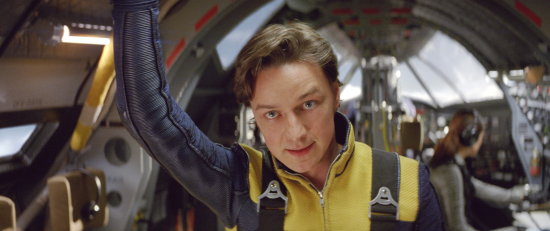
When you stick a gaggle of superhumans together and let their doomsday du jour story play out, what you should have is really a story about their own interconnections, personal demons, and motivations such that you could overlay the thing onto Greek or Roman (or similar) mythology. It should come at you as almost comically human that their world revolves around cheating husbands, daddy issues, pride, and betrayal, despite their grand ability to flick a lightning bolt at you.
Such relationships and inner turmoil existed in the first X-Men films, but they were buried and often half-assed attempts that only made it to the screen because they were integral parts of the characters we were working with, and (for example) fans wouldn’t recognize Wolverine if he weren’t a gruff bastard…, but they weren’t what the movies were about. They acknowledged many aspects of the comic genre and character struggles, but almost as though reporting them, and not making an effort to execute them.
First Class allows itself to build these things in, and, thanks to exceptional turns by McAvoy and Fassbender, weaves a complex set of statements and ideals into something fresh, fun, and thoroughly enjoyable. More importantly, it does so without having to beat you over the head with anything it says, because the structure is put together solidly enough that the ties are there.
As just one example, Xavier talks with Beast about Dr. Jekyll and Mr. Hide, skips to the conclusion that the story isn’t about Good vs. Evil, but man’s battle with his own “beastly” side. This, quite naturally, is in reference to Beast as “beast” and finding the balance without giving in to it. It’s a small enough moment in the film, and makes perfect sense for Beast’s particular struggle, but it lays down the pattern of thought that also leads to the idea that it really references Magneto and other mutants giving in to their own “beast,” which is just that which they are by virtue of genetic makeup.
I know.
The only real problem with the film is that we’ve had three that take place in the future and (despite the fact that we play around a bit with who should really be in what time) we’ve already used up a lot of X-Men. Thus, the alternate title to the film could easily be X-Men: The Sort Of Goofy Ones. I’ve always rather liked Banshee, but he’s mostly foppish here. Havok is interesting for the Cyclops connection, but Riptide, Darwin, and Angel (the Tempest one, not the Archangel one), aren’t exactly the biggest names on the X-Men roster. Emma Frost is interesting…

See?
But, overall this is not the X-Men that delivers tons of mutant punch. Even Sebastian Shaw, who is an incredibly cool character in the comics, has a somewhat boring power when you put it on the screen and have to try to work with it. Azazel, Nightcrawler’s father, is the main saving grace in terms of action abilities, but that was balanced against the fact that he only said about fifteen total words in the film.
In the end, it’s a comic book movie worthy of both names, and curiously enough comes to you by way of the man responsible for Kick-Ass, which is something of an anti-comic book movie. You can see it actually, and that’s probably why it’s so good.
RU?

